
PHASE GALLERY
PHASE Gallery features work that blends technology, social impact, and art in new innovative mediums. Creators that work in the realms of both bits and atoms – Digital and Physical matter. PHASE Gallery celebrates the process and technical craft of artists, designers, and engineers creating on the cutting edge and making an impact on their communities.
Currently on view:
September 2026 – Present
A House that Holds the Weight of Small Things
By: Noah Gear
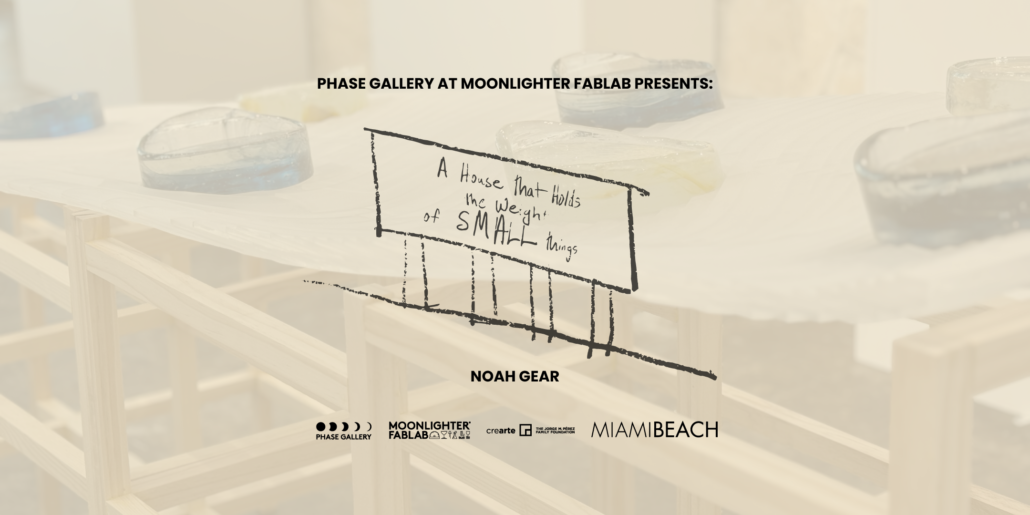
A House That Holds the Weight of Small Things acknowledges both the physical and emotional weight a home is meant to carry. At its center is Slope House, a home designed for my father, floating above the land and held by a field of heavy cruciform columns. The columns carry the house while standing almost as figures themselves, evoking support, presence, and lineage. Around the house, objects explore concepts of gravity, weight, and tension through contrasts in material and making. Glass is fragile yet made structural. Resin moves from liquid to mass. Wood is cut, joined, and carved, its strength revealed through the hand. Through glassblowing, casting, carpentry, and molding, materials are pushed against their expected nature: delicate and load-bearing, fluid and rigid, solid and hollow. Within these contradictions, material becomes a way of giving form to tension, between what appears fragile and what it is asked to hold. The objects draw from the architecture, carrying its forms from the scale of the house to the scale of the body. A column becomes a table. Glass becomes a stool. A sloped plane becomes a vessel for the smallest things we keep close. Together, they imagine structure not simply as resistance to gravity, but as an act of care: a way of holding space, holding memory, and giving form to what might otherwise remain unseen.
About Noah Gear
Noah Gear is an architectural designer, educator, and maker whose practice moves between architecture, furniture, objects, and material research. He is the founder of Noah Gear Studio, an interdisciplinary design practice exploring how material, structure, and domestic space can carry memory, identity, and lived experience.
Gear’s work approaches design as both a technical and narrative practice, moving fluidly between the scale of the house and the objects that inhabit it. His current work includes residential projects, furniture and object collections, and ongoing material investigations in wood, glass, concrete, and resin. Central to his practice is an interest in weight: how things are supported, what they are asked to carry, and how structural relationships can make visible the emotional and cultural forces embedded within everyday spaces.
His work has been exhibited at Cornell University and in Miami, Florida, including his most recent exhibition, A House That Holds the Weight of Small Things, an evolving body of work examining Black domestic space through architecture and objects.
Gear holds a Bachelor of Architecture and a Master of Science in Advanced Architectural Design from Cornell University. He currently teaches architecture at the University of Miami School of Architecture while leading Noah Gear Studio.
RSVP for the Opening Event on October 15th, 2026 6pm-9pm

Gallery Shop
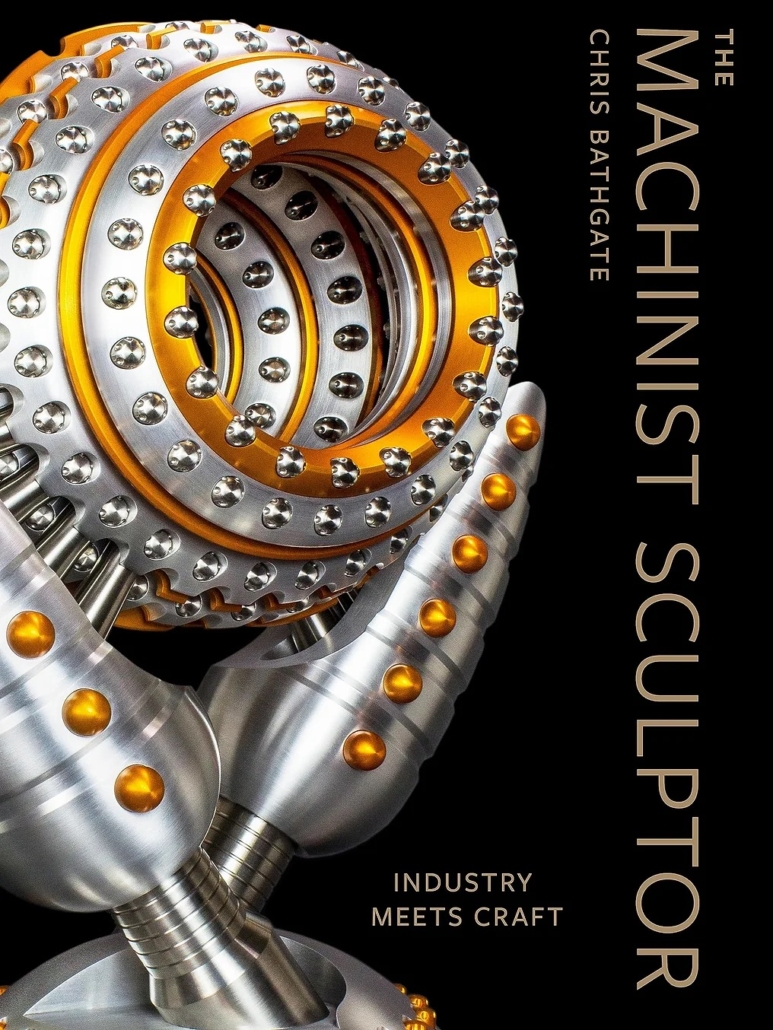
MACHINIST SCULPTOR: Industry Meets Craft
by: Christopher Bathgate
Art Book Signed by Artist
On View in Pennsylvania Avenue Window
Currently On view in Pennsylvania Avenue Window
(September – November 2024 in Phase Gallery)
DANCING COLUMNS: Equation-based Robotic Fabrication
by Joseph Choma and Luis Pacheco
This gallery showcases an exploration of robotic 3D printed objects generated from mathematical equations, created by Joseph Choma and Luis Pacheco, with fabrication support from the RDF Lab at FIU. The featured objects are derived from a family of morphed toruses, where altering the parameters of the equations leads to captivating and unexpected geometric features. The forms emerge from a complex interplay of sine and cosine functions, as seen in the provided equations, where variables are manipulated to create intricate, undulating surfaces. This collaboration bridges the gap between digital design and physical manifestation, emphasizing the artistic potential of mathematical equations in creating dynamic forms. A deeper study of these geometric mutations can be found in the book, “Morphing: A Guide to Mathematical Transformations for Architects and Designers” by Joseph Choma, which delves into the processes and theories behind these transformations.
Joseph Choma is Director of the School of Architecture and Professor of Architecture at Florida Atlantic University. Previously, he taught at The Cooper Union, MIT, and Clemson University. He was the 2019-20 NCCR Digital Fabrication Researcher in Residence at the ETH Zurich and received awards from the AIA, ACMA, and ACADIA — including the 2023 ACADIA Innovative Research Award of Excellence. His material explorations have been noted by CompositesWorld Magazine as “spearheading research into the use of foldable composites.” He is the inventor of Foldable Composite Structures — U.S. Patent Number 10,994,468. Additionally, he is the author of three books, Morphing: A Guide to Mathematical Transformations for Architects and Designers (2015), Études for Architects (2018) and The Philosophy of Dumbness (2020). Joseph completed graduate studies in design and computation at MIT and completed his PhD in Architecture at the University of Cambridge, where he was a Cambridge International Scholar.
Luis Pacheco is a Robotics and Digital Fabrication Research Specialist at Florida International University, where he also serves as an adjunct professor in the School of Architecture and the Robotics and Digital Fabrication Lab. With a deep specialization in digital manufacturing, computational design, and architectural robotics, his research emphasizes innovative workflows in additive manufacturing for construction and the development of robot control interfaces. He is also the founder of Neobrutal Studio a consulting company for additive manufacturing and robotics and was previously the co-founder and CEO of MakerMex, Mexico’s first 3D printer manufacturing company,he was recognized as one of MIT’s Innovators Under 35 in 2016.
Exhibition Archive
May 25, 2026 – August 28, 2026
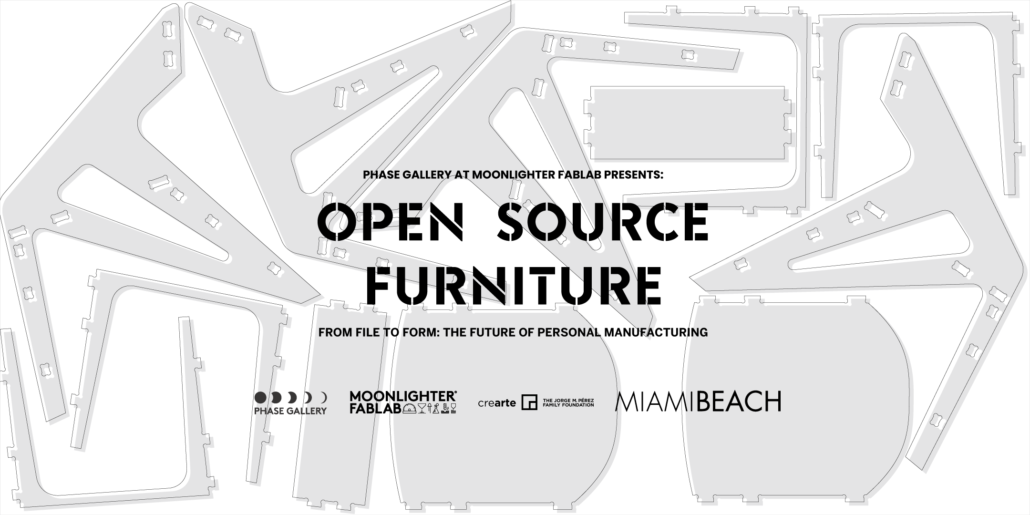
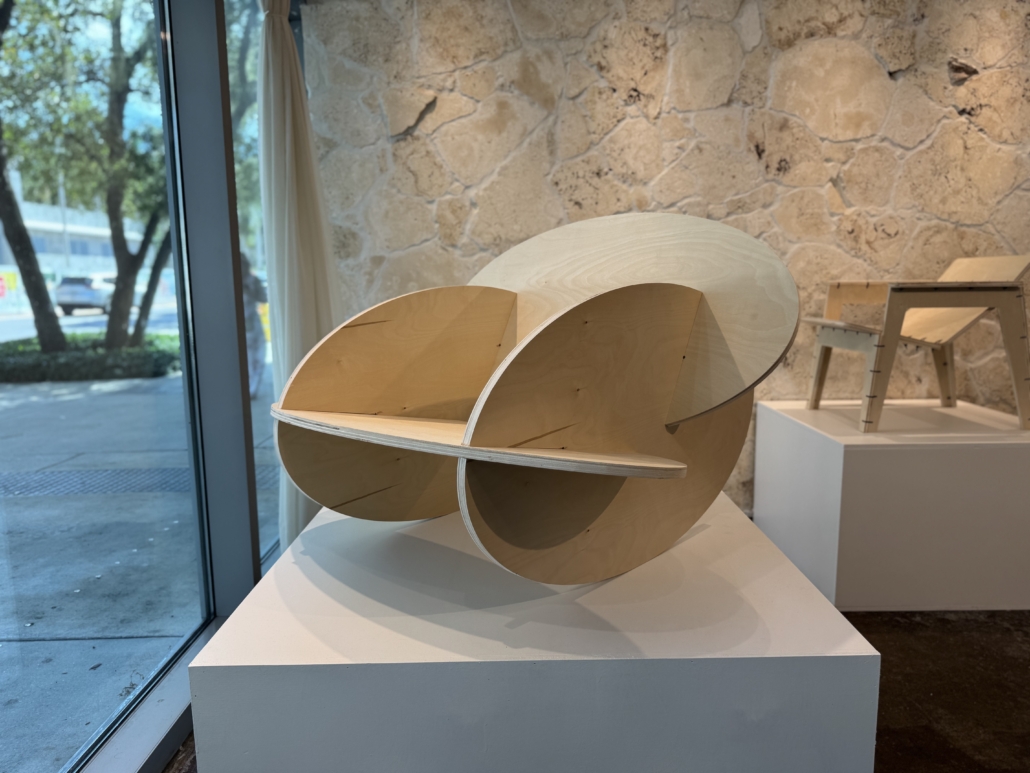
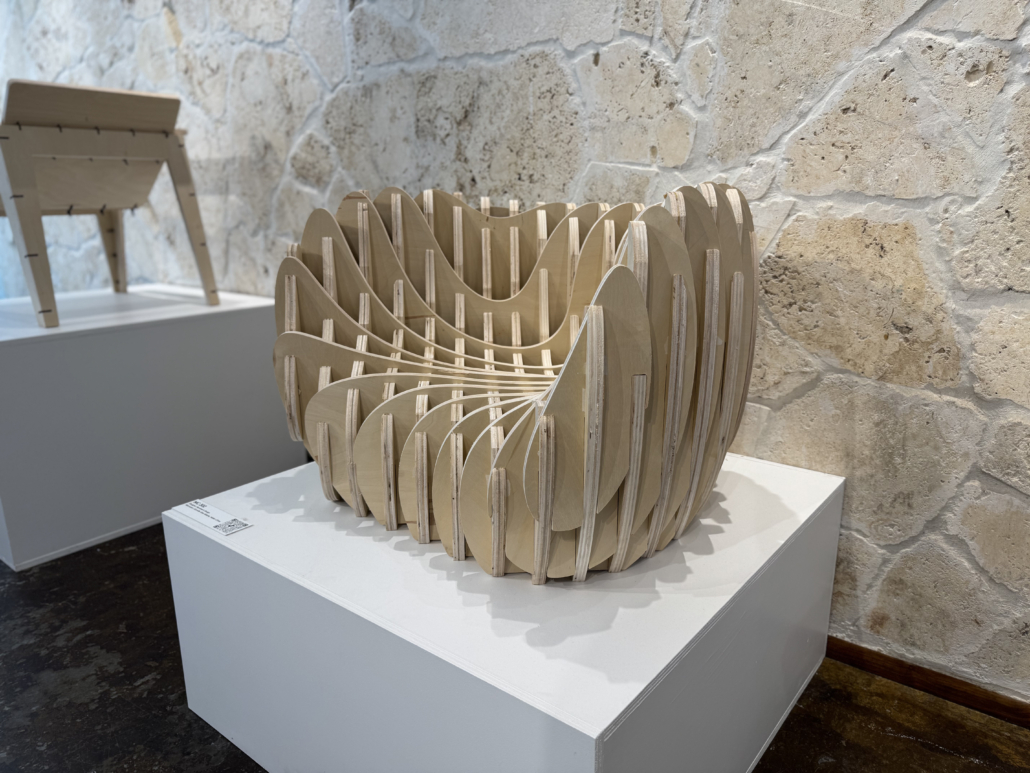
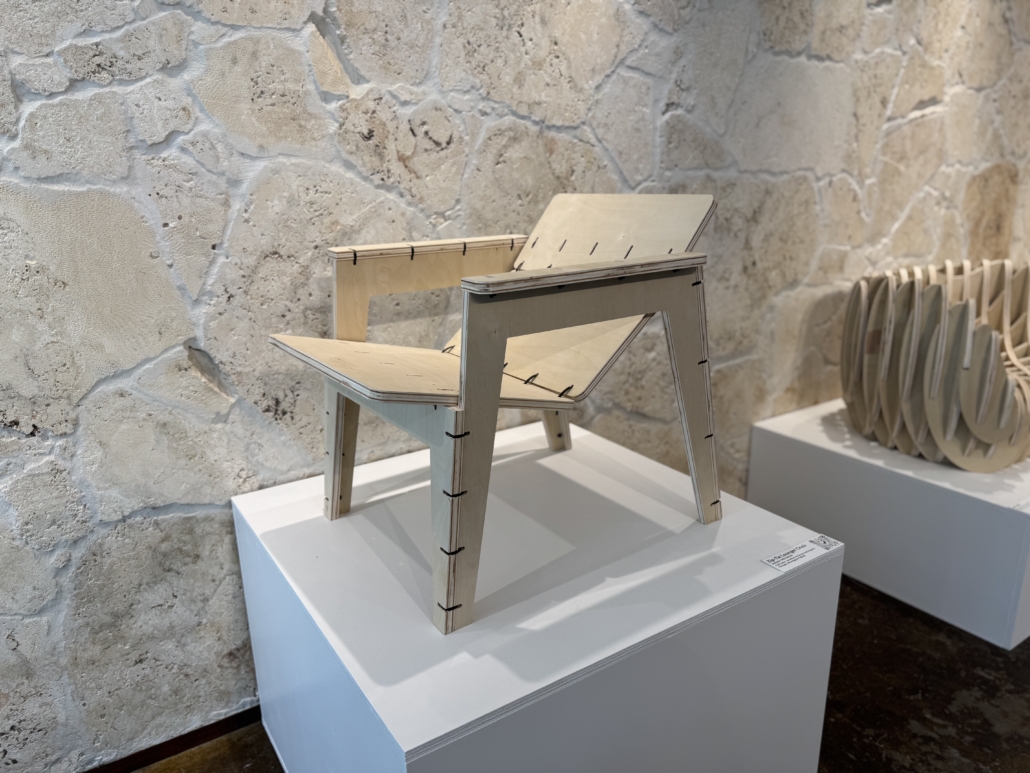
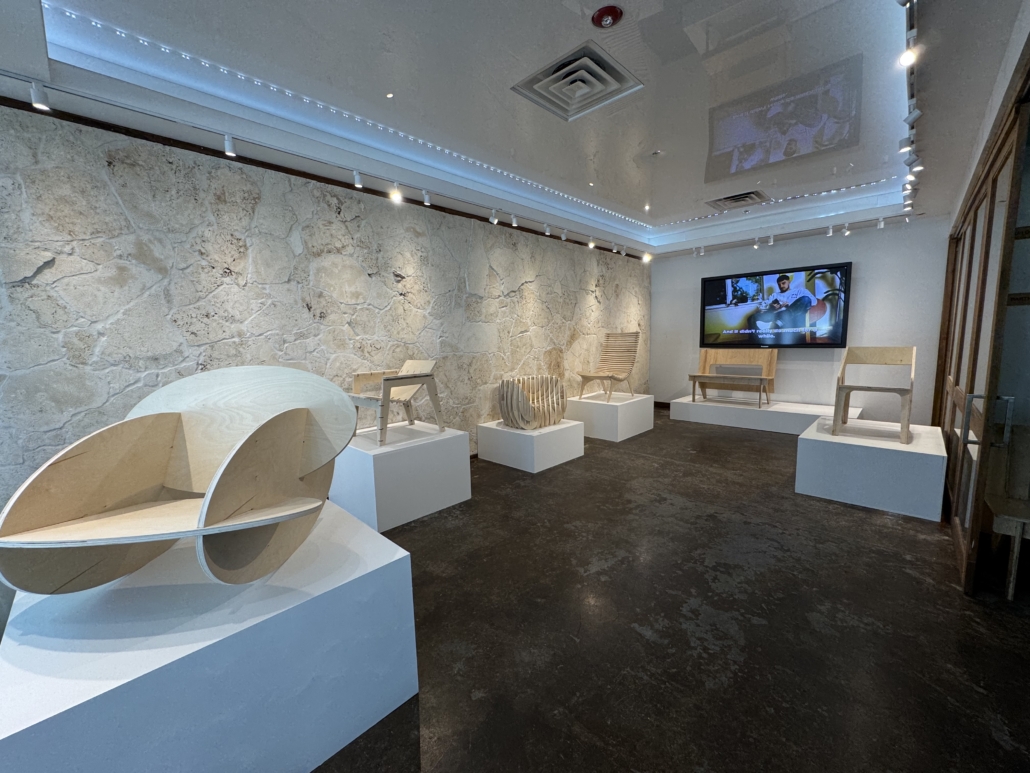
Open-Source Furniture
FROM FILE TO FORM: THE FUTURE OF PERSONAL MANUFACTURING
Before the smartphone, before the internet as we know it, a quiet revolution was underway in software. Programmers began sharing their source code openly, freely, and globally, trusting that collaboration would produce better results than secrecy ever could. From that philosophy emerged Linux, the operating system powering most of the world’s servers. From it came Arduino, the microcontroller that put electronics prototyping in the hands of students, artists, and tinkerers everywhere. Open source didn’t just democratize technology. It rewired how humans innovate together. Now that same logic is coming to your living room.
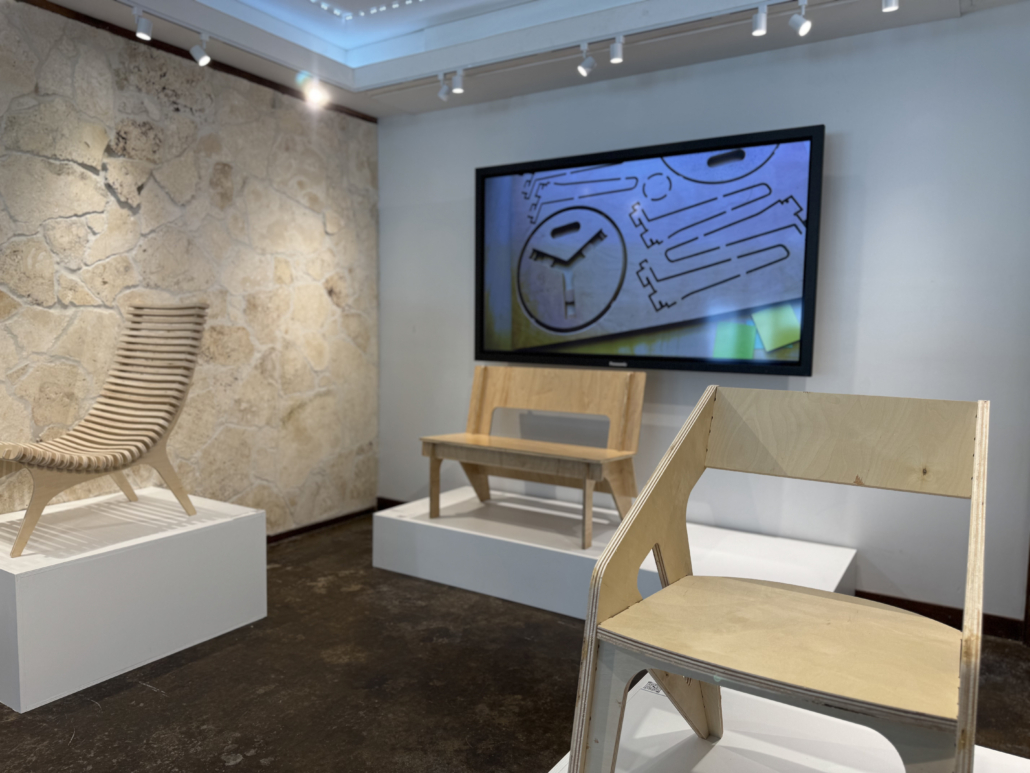
The objects in this exhibition are furniture, but they are also statements. Each chair, lounger, and bench you see here began not as a physical prototype in a private workshop, but as a digital file, shared openly on the internet, ready to be downloaded, modified, and fabricated by anyone with access to a CNC router. These are not mass-produced goods shipped from a factory across the ocean. They are locally made, often by the same hands that will use them. This is distributed manufacturing, and it changes nearly everything about how designed goods move through the world. A designer in Brooklyn can publish a file that gets cut from plywood in Miami, Melbourne, and Munich, all in the same week, with no shipping container, no warehouse, no middleman. The design scales globally while the fabrication stays local, closer to cities, closer to communities, closer to the people who need the thing. At a moment when supply chains have revealed themselves to be fragile and wasteful, this model offers something more resilient: production rooted in place.
Looking closely at how these pieces are assembled: Some are pure press-fit, no hardware at all, held together by the precision of the cut and the intelligence of the joint. Others use unexpected fasteners. Will Holman’s Zip Tie Lounger makes the humble zip tie structural, a tongue-in-cheek provocation about what counts as a legitimate building material. The Dreambox couch by WikiBlock invites reconfiguration as a feature, not an afterthought. The Oval Rocker by Andrew Doxtater Studio and the Rothermel and Helton Chair by OpenDesk demonstrate that open source need not mean rough or provisional. These are considered, beautiful objects. Notice too the material itself speaking: the kerf bending patterns where flat sheet goods curve organically, the interlocking tabs that click together like a three-dimensional puzzle. CNC fabrication has its own vocabulary, and these designers are fluent in it.
There is also something more intimate at work here. Furniture occupies a particular place in our emotional lives. It holds us, literally, as we rest, eat, work, and gather. When you build the thing yourself, even partially, your relationship to it changes. You understand its logic. You know where it is fragile and where it is strong. You are more likely to repair it than discard it, and in a culture drowning in disposable goods, that matters enormously. There is also a practical reality: these flat-pack forms are made for modern urban life, where people move often and apartments change. A piece that assembles in an afternoon and disassembles just as easily is not a compromise. It is a considered response to how we actually live.
The conversation does not stop at the individual object. Open source manufacturing opens the door to mass customization at a scale that was previously impossible. A standard joint system can be adapted for a shorter seat, a wider armrest, a different wood species, a differently abled body. Standardization and personalization are no longer opposites. The file is just the starting point. This is a new paradigm, and you are standing inside it. The question it leaves with you is not merely aesthetic. It is participatory. The files for many of the works in this exhibition are available online, free, right now. You could download one tonight. You could join a makerspace, book time on a CNC router, and build your own. The barrier between viewer and maker has never been lower, and what is being made here is not just furniture. It is a different way of thinking about who gets to design the world we live in.

October 16, 2025 – May 16, 2026
Dawn of Digital: The Art and Soul of Early Computing
By Mario Cruz
Celebrating the design and innovation of the technologies that sparked the digital revolution – Featuring selections from the private collection of Mario Cruz with restoration support from Miguel Corteguera. Step into the spark that ignited our digital age. Dawn of Digital: The Art & Soul of Early Computing invites visitors to explore the iconic devices that revolutionized the relationship between humans and machines. This carefully curated exhibition pays tribute to the bold industrial design and technological innovation that defined the dawn of personal computing—from raw circuitry to sculpted elegance. At the core of this exhibit is the belief that computing has always been more than code and hardware—it is a reflection of human imagination, aspiration, and design. Each object on display, generously loaned by collector Mario Cruz, tells a unique story of a pivotal moment in our collective technological evolution. Together, they form a visual timeline of ingenuity: machines that shrank rooms of computing power into homes, schools, and briefcases—each one reshaping how we live, work, and play. From the functional minimalism of the TRS-80 Model 3 (1980), engineered to overcome radio interference and offer stability for home users, to the whimsical, award-winning elegance of the iMac G4 (2002), design evolves alongside accessibility. Early pioneers like the Commodore VIC-20 (1980) made computing affordable and friendly, while powerful systems like the PDP-11/70 (1975) served as the unseen backbone of scientific progress. Witness the playful rise of gaming consoles like the ATARI 2600A and Magnavox Odyssey 2, which transported the arcade into the living room and introduced a generation to digital interactivity. Meanwhile, the Kaypro II and TRS-80 Model 100 embodied early dreams of computing on-the-go, encapsulating the rugged portability and purpose-driven design that shaped today’s mobile devices. Dawn of Digital not only celebrates these technological artifacts as milestones but elevates them as cultural objects—evidence of an era that dared to imagine computing as universal. These machines reflect the shift from the specialist to the everyday user, from labs to living rooms, from mainframes to mouse clicks.
Dec 2024 – May 2025
BATHGATE: The Machinist Sculptor
By Christopher Bathgate
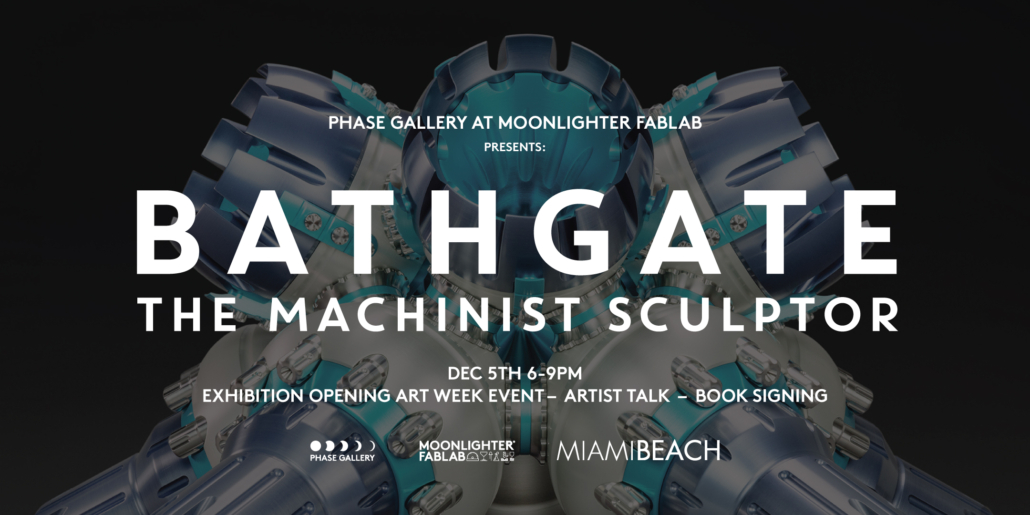
Visitors to the exhibition will view a selection of Bathgate’s machined metal works made as part of a formalistic and conceptual investigation of modern, computer numerically controlled machining as a creative medium. The entire body of work serves as an ongoing investigation into this concept, where each piece informs the next in a continuous cycle of ideation, problem-solving, fabrication, analysis, and revision. His aesthetic considerations are deeply intertwined with the very machines he employs, leading to a symbiotic relationship where the machinery itself evolves alongside his sculptures.
Playing with the tension between aesthetic and utility, form and function, industrial and handmade, Bathgate’s work challenges traditional categorizations. His sculptures are meticulously engineered, with every detail methodically designed from the ground up. Yet, they transcend mere technical prowess, evoking a sense of creative logic that captivates viewers.
“Modern manufacturing has created a space where there are a great number of craftsmen practicing a way of working that no longer has a place in a modern factory. There is room now to explore these machines and techniques for what other purposes they might serve. We can now mine them for their worth as a means of personal expression.”
–CHRISTOPHER BATHGATE
About Christopher Bathgate
Chris Bathgate is a self-taught machinist and machine builder. He has spent over two decades building and modifying a variety of metalworking tools and automated machinery to create intricately machined metal sculptures that defy easy classification. Through his work, the artist has attempted to coin the term “studio machining” as an emerging field within the fine arts. His works are fundamentally engineered, every detail methodically designed from the ground up. They illustrate that creativity alone does not drive human imagination, but that inspiration comes from the need to overcome technical challenges. By combining the math and logistics of modern machine work with an emotive problem-solving ethic, the artist bends the physical constraints of his medium to an aesthetic that plays on ideas of utility and ambiguous design intent. The result is precise and other worldly art objects that exude a creative logic all their own. Chris is author of the book “The Machinist Sculptor: Industry Meets Craft,” which explores the history of Machine work and its evolving status as a fine art craft, through the lens of his pioneering sculpture practice. It serves as a contemporary reflection on the modern state of craft, and a historical corrective to the technological dogmas that emerged during the studio craft movements of the 20th century.
Bathgate’s work has been exhibited at the Fuller Craft Museum, National Museum of Industrial History, MECM, and more. Learn more at www.chrisbathgate.com
March – August 2024
THE UNDERWATER by Xavier Cortada
Miami-Dade County artist-in-residence Xavier Cortada engages the public with “The Underwater”, a socially engaged art project debuting at The Phase Gallery in Moonlighter FabLab Miami Beach during The Aspen Ideas Climate Summit and will remain on view through May 31st, 2024. This community-based initiative calls attention to the climate crisis through site-specific yard signs that creatively reveal South Florida’s vulnerability to rising seas, spark climate conversations, and catalyze civic engagement.
Visitors of The Underwater exhibit are introduced to the county-wide initiative, then encouraged to engage in the participatory art project by discovering the elevation of their home, and drawing that number on a blank yard sign. Once residents place these elevation marked signs in their front yard, curiosity from neighbors, friends, and family is instantly sparked as the meaning of the number is unknown to anyone not familiar with the project.
“By mapping the impending crisis, I make the invisible visible. Block by block, house by house, neighbor by neighbor, I want to make the future impact of sea level rise something impossible to ignore. “I hope to engage my neighbors as problem solvers who will learn and work together now to better prepare themselves and their heirs for the chaos to come.”
– XAVIER CORTADA
November 2023 – February 2024
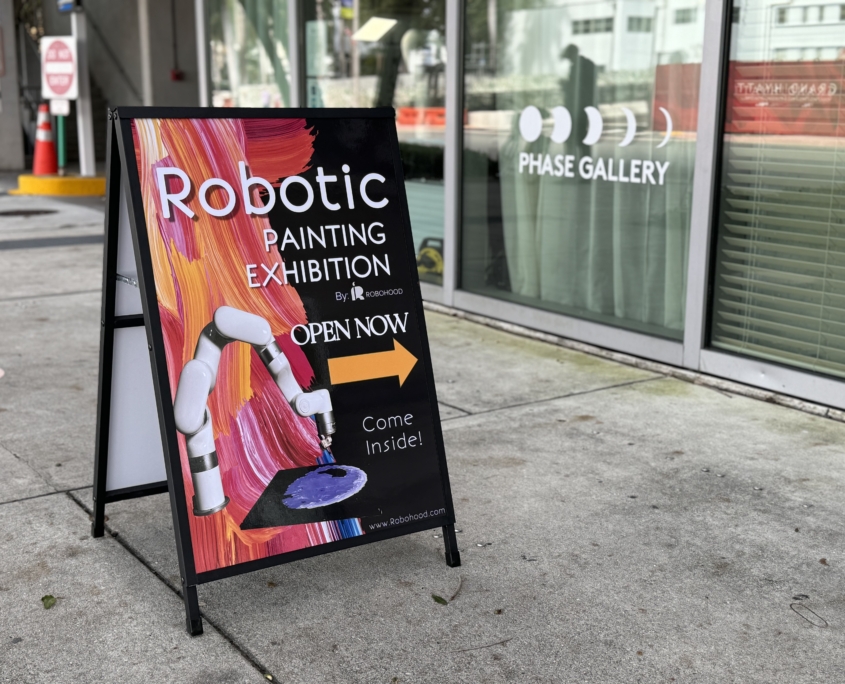
HUMAN X AI/ROBOTIC ART with Robohood
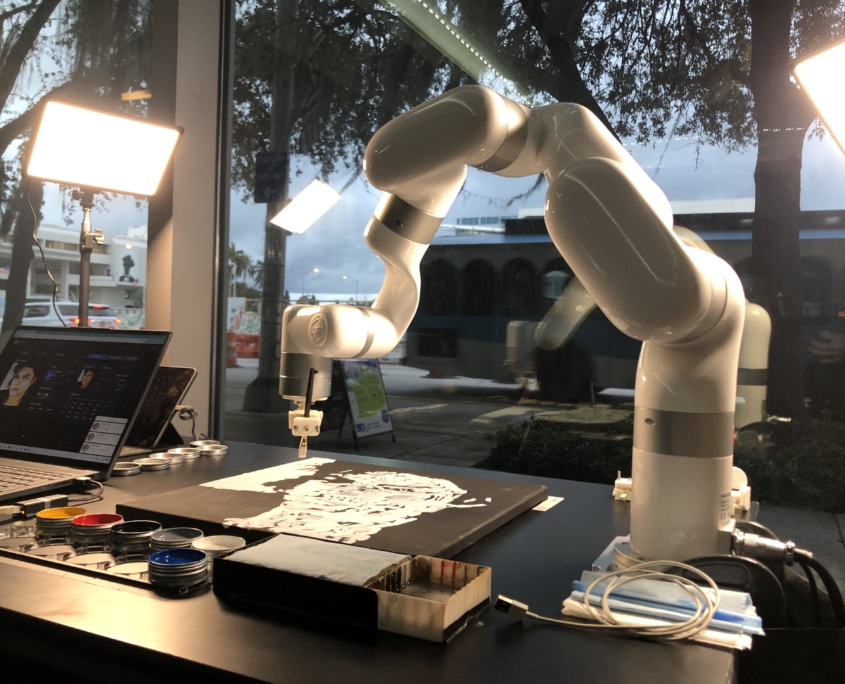
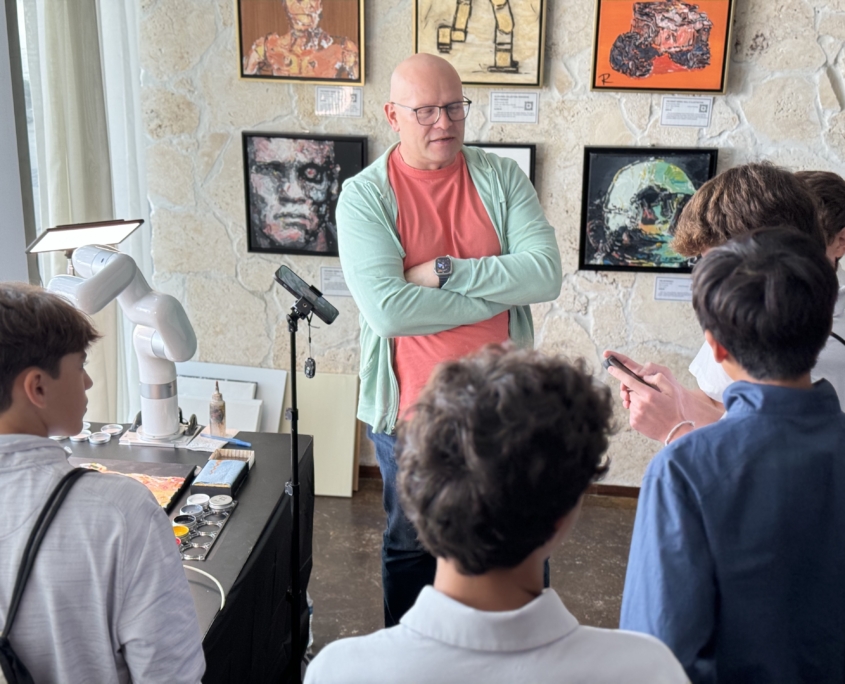
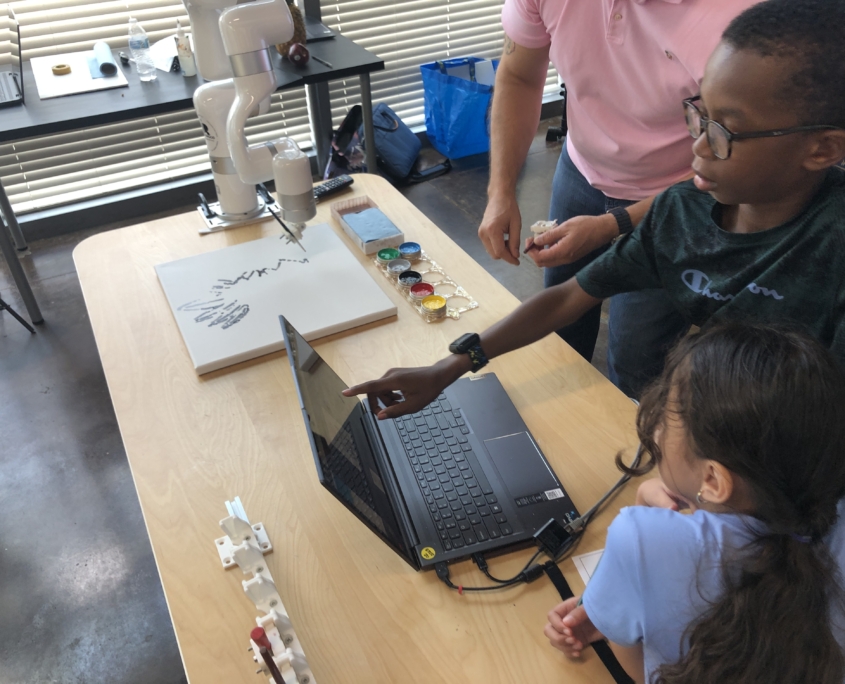
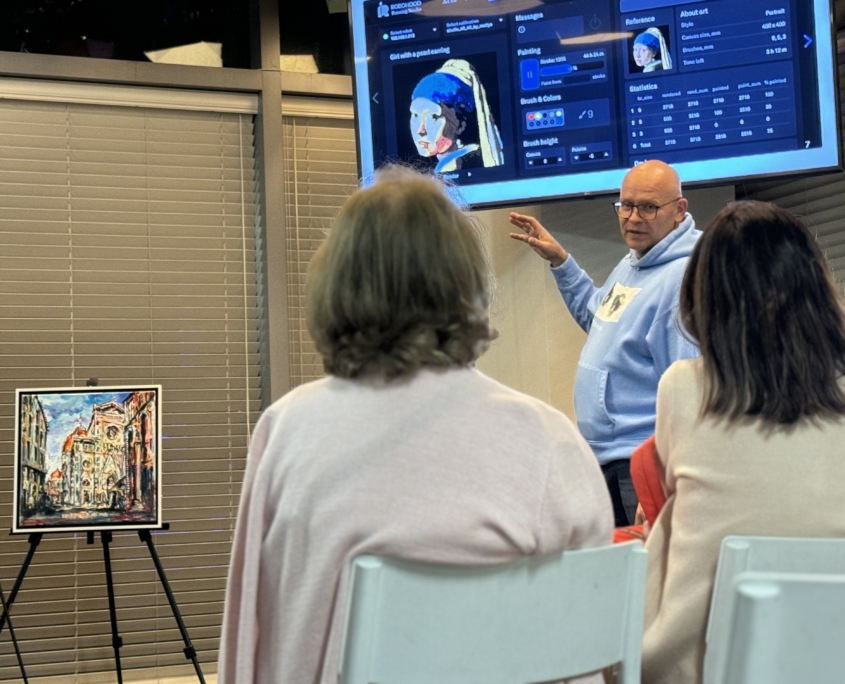
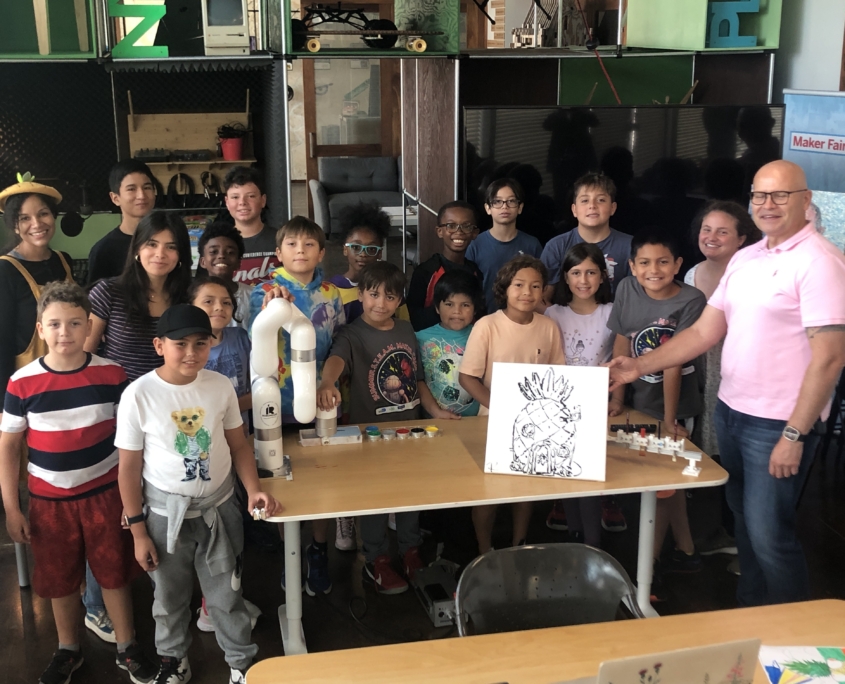
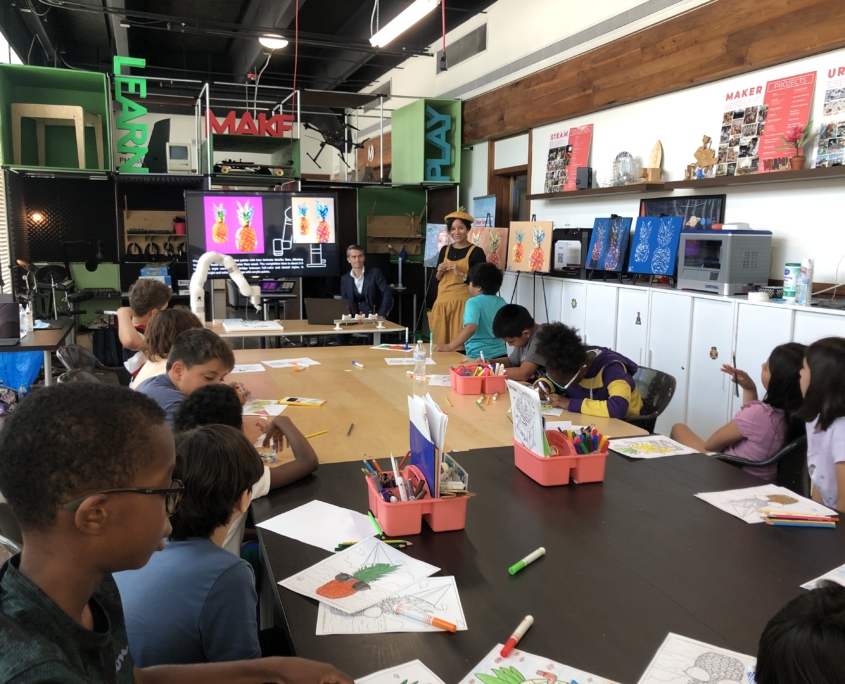
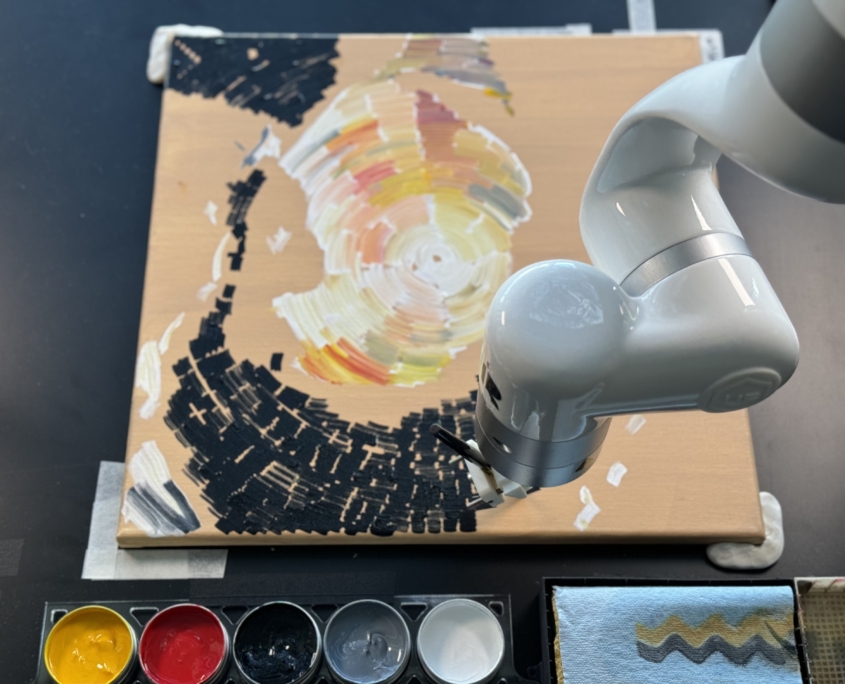
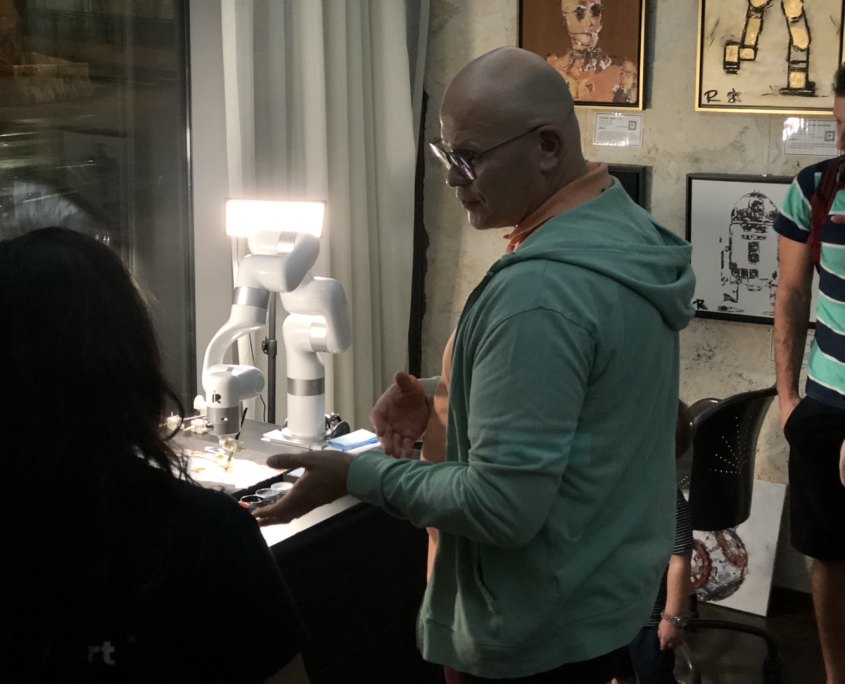
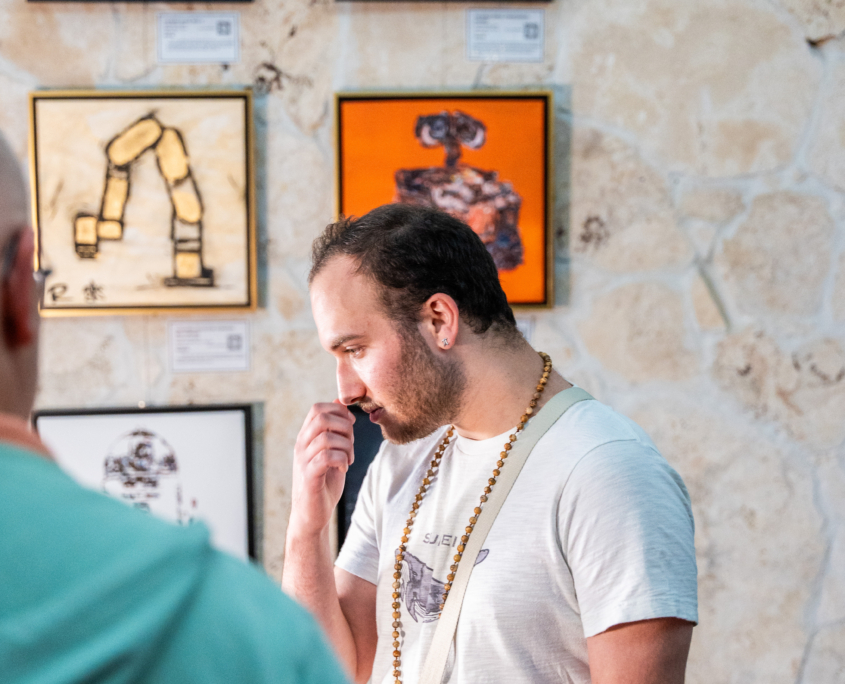
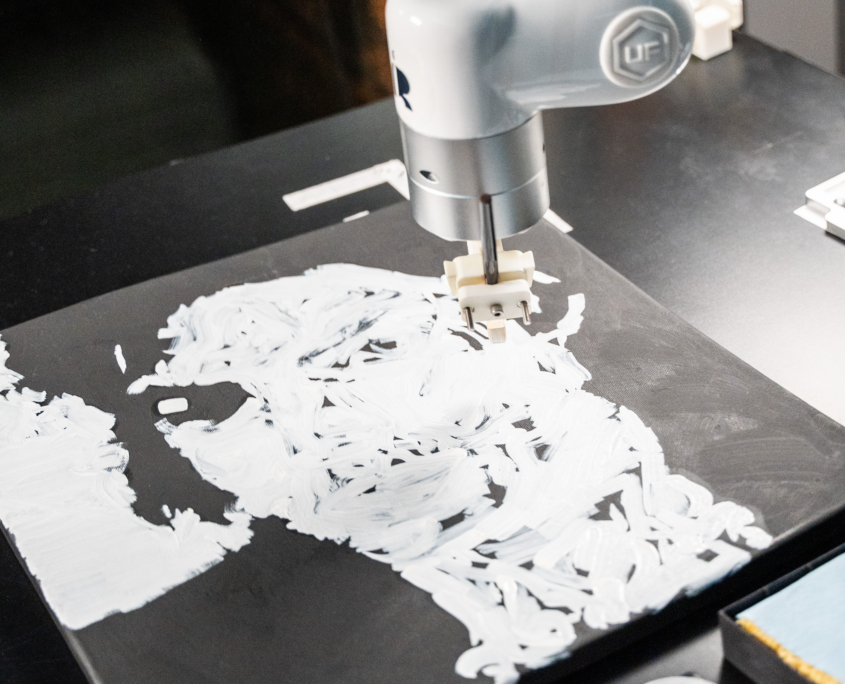
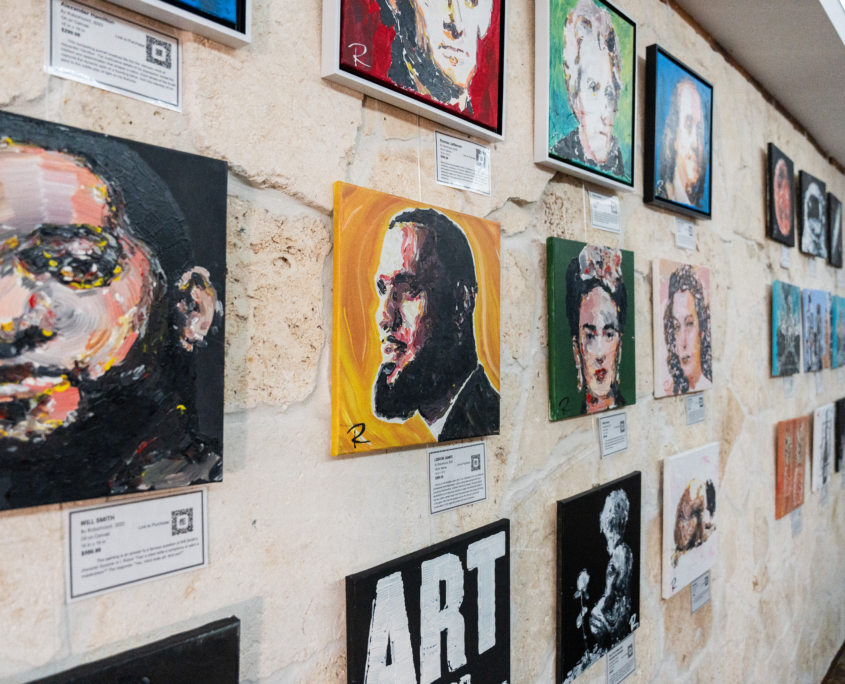
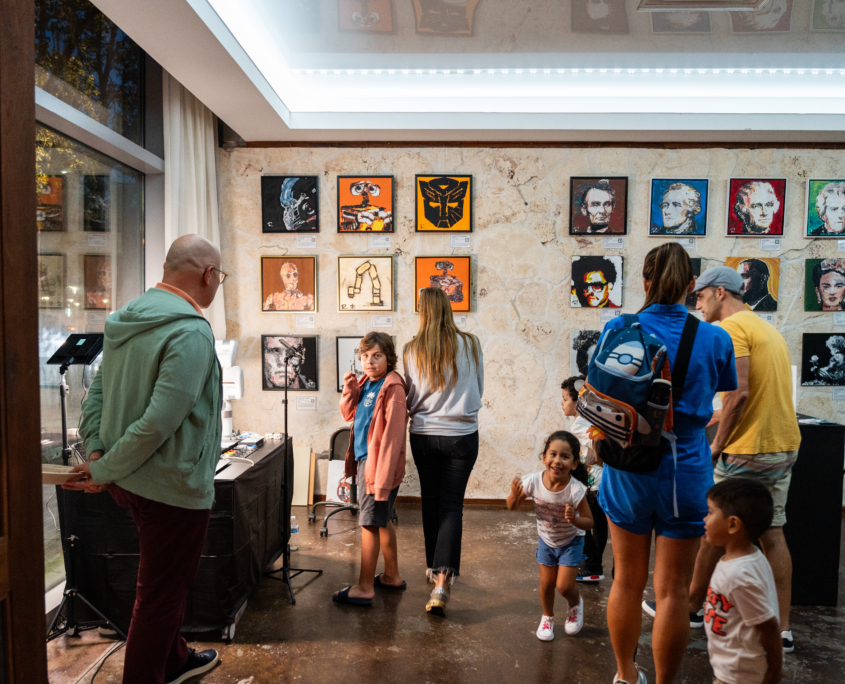
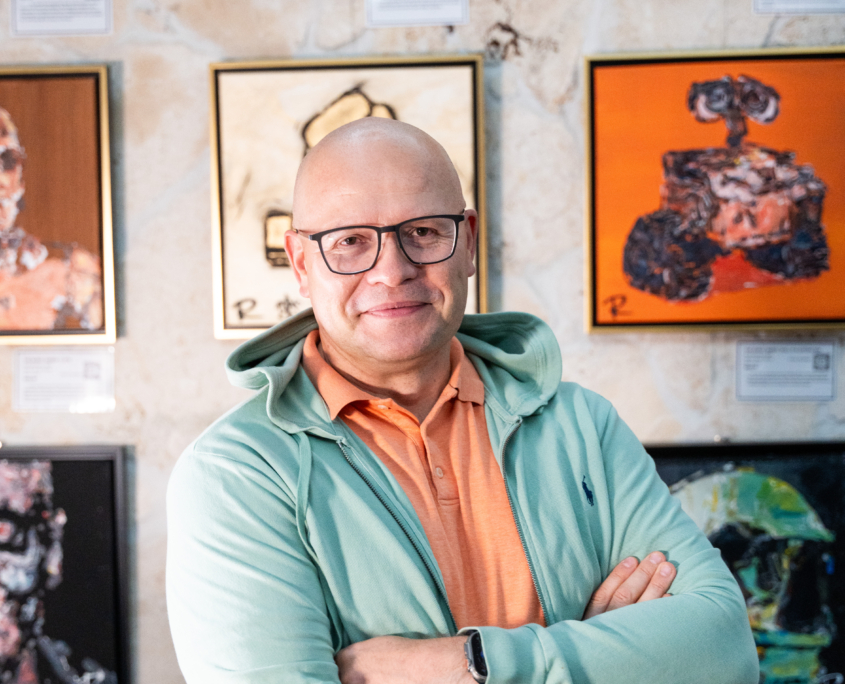
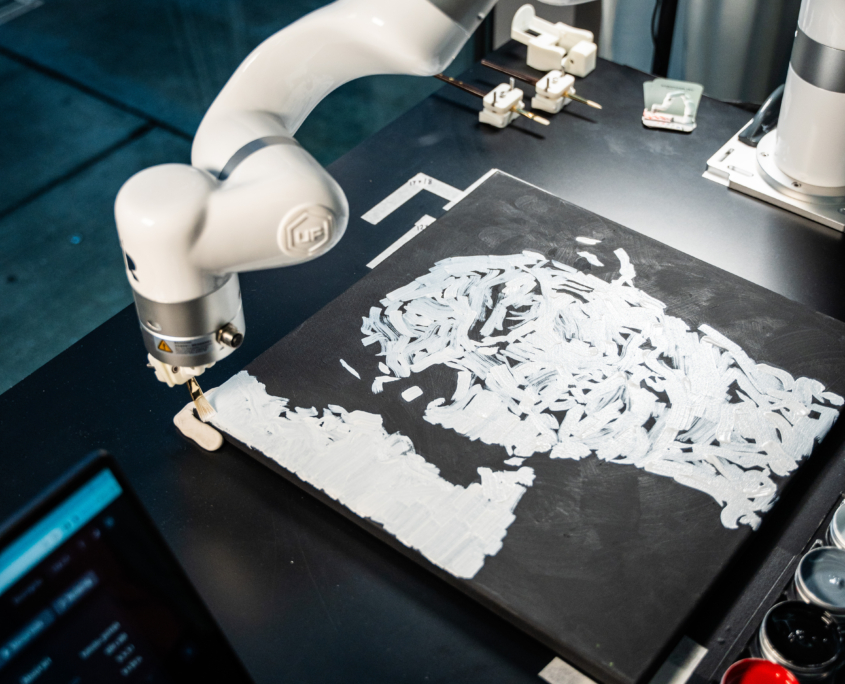
Robohood Founder Vladimir Tsimberg is a Physician, Entrepreneur, and an emerging artist. He created Robohood with the premise that an artist’s ability to put their ideas onto canvas can be inhibited by physical limitations, such as limited visual-spatial perception or a physical disability. Vladimir became convinced that an artist’s physical limitations should not limit their ability to imagine and create. What if everyone can paint with the help of robotics and artificial intelligence? In May 2021, Vladimir Tsimberg teamed up with engineers, programmers, and technology experts to establish Robohood, revolutionizing the arts by introducing robotic painting technology worldwide. Artists can now embark on a new journey by collaborating with a robot adding new depth to the creative process. The artist can program various parameters including painting techniques, strokes, and colors – to develop new iterations of their creative visions. A true robot/human collaboration for an emerging form of art – elevating the abilities of the artist with a new medium for creativity.

July – October 2023
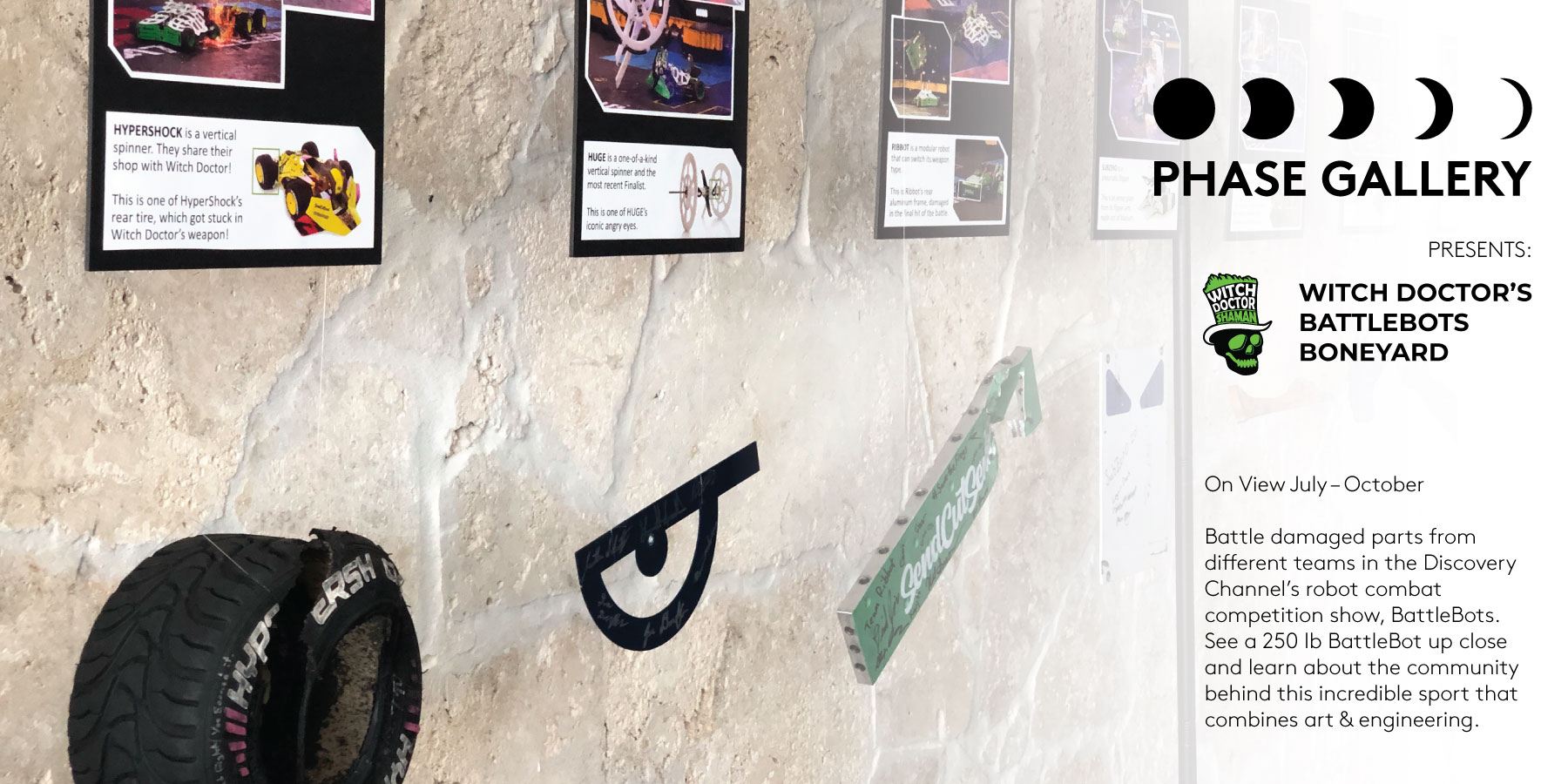
Witch Doctor’s BattleBots Boneyard
For the opening of the exhibition, over 3 Days, Witch Doctor lead a community workshop to teach beginners how to build their own 3D printed 1lb combat robots. The week culminated in a Creative Mornings Talk by Andrea Gellatly, the Team Captain at Witch Doctor, followed by a full day of robot competitions with the newly built bots! Everyone enjoyed the debut of the new exhibition in the PHASE Gallery that highlights battle damaged parts from many fan favorite teams from the popular Discovery Channel competition show.
Inaugural Exhibition
February 2023 – July 2023
RAW.CUT
The Laser Cut Art of Neil Paterson
Architect and artist Neil Paterson blends a knowledge and love of traditional architectural proportions with a joy in the details of odd science fiction references and old machinery to create an intriguing, abstract combination of the familiar and the unfamiliar. Inspired by the spectacular landscapes, textures, and history of his hometown in Scotland.